
Coating removal
How a Paint Shop in Thailand Cut Its Jig-Cleaning Chemical Cost by 70%
On a paint line, the jigs and hangers that hold the parts get coated too, every single cycle. If the jigs are not cleaned, the build-up shifts the part position and flakes of old coating end up on the product. That is why jig cleaning is a routine job in every paint shop.
This is a case from a Japanese-owned automotive parts plant in Thailand. The request was simple: "Our jig-cleaning chemical costs too much. We also want to reduce the burden on the environment and on our operators."
The situation when they came to us
- Parts: ring-shaped carrier jigs for paint rings, about 320 mm in diameter
- Quantity: about 600 jigs across three plants, handled in sets of 60 (remove from line → clean → return to line)
- Frequency: once a week, plus a full batch clean four times a year
- Method: 5-minute soak in a 300 L tank of dichloromethane-based cleaner → 3 minutes of brushing per jig → 1 minute in a 100 L finishing tank
- Chemical cost: about THB 309,000 per month on average
Dichloromethane-based cleaners dissolve coatings well. But they evaporate quickly, have a strong odour, and in Japan are regulated as a specified chemical substance that requires workplace exposure control. The more you use, the higher both the cost and the operator burden.
What we tested
We cleaned the customer's actual jigs with KAKEN TECH STRIAL UM-25U, a coating remover.
| Item | Condition |
|---|---|
| Chemical | STRIAL UM-25U, undiluted |
| Volume | 60 L (3 × 20 L pails) |
| Temperature | about 90 °C (heater) |
| Time | 10-minute soak |
| Finish | light wipe |
Before
After
No.1
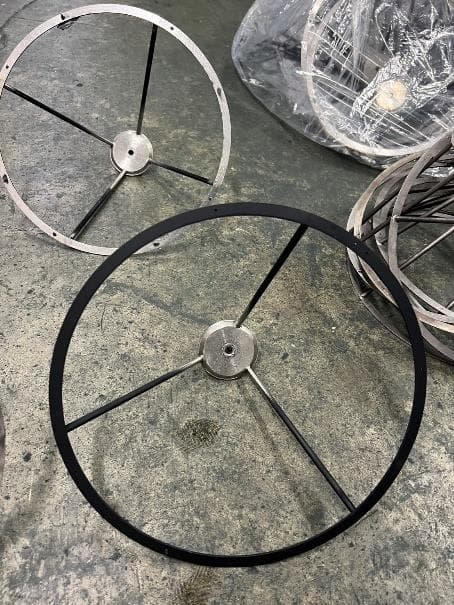
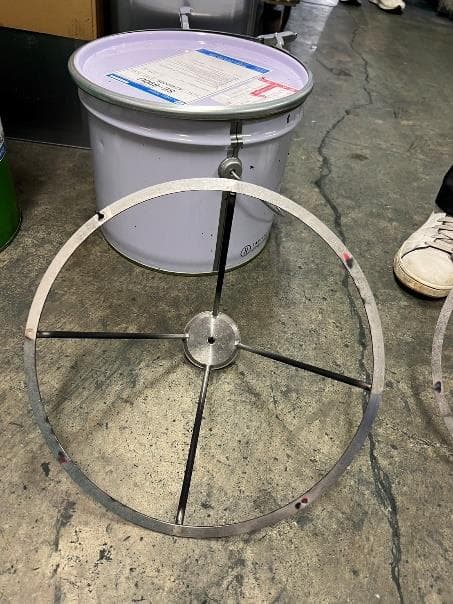
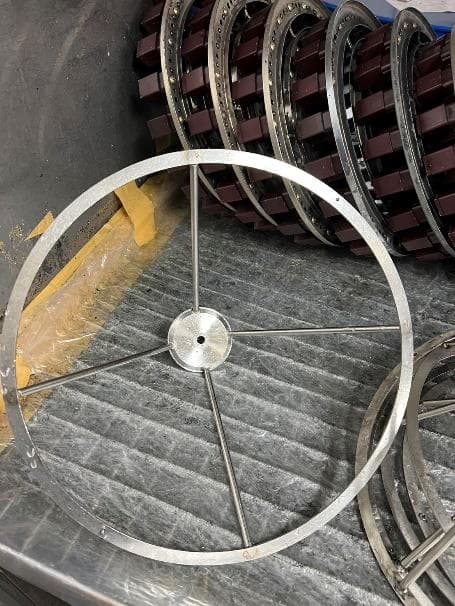
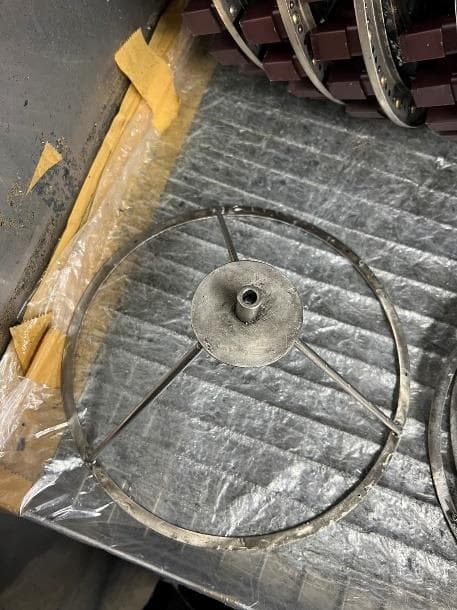
After 10 minutes the coating had lifted and a light wipe left the jigs clean. Before cleaning, the jigs were black with layered coating; after cleaning, bare metal.
One rule of thumb came out of the test: when cleaning starts to take more than 50 minutes, it is time to change the bath. As the bath absorbs coating, it slows down.
Cost after the switch
Based on eight months of actual use, we compared chemical spend before and after.
Unit price
Dichloromethane-based (before)THB 15,900 / 200 L drum (about THB 80 / L)
STRIAL UM-25U (after)THB 9,500 / 20 L pail (THB 475 / L)
Monthly usage
Dichloromethane-based (before)about 4,000 L (about 19.4 drums)
STRIAL UM-25U (after)about 190 L (about 9.7 pails)
Monthly chemical cost
Dichloromethane-based (before)about THB 309,000
STRIAL UM-25U (after)about THB 92,000
Monthly chemical cost fell by about 70%.
Per litre, STRIAL looks about six times more expensive. The saving comes from volume. A dichloromethane cleaner has to be topped up constantly to replace what evaporates. STRIAL UM-25U is heated, so it evaporates as well, but when the level drops they add water (about twice at this plant) and the bath lasts longer. That is why the top-up volume dropped sharply.
What changed on the shop floor
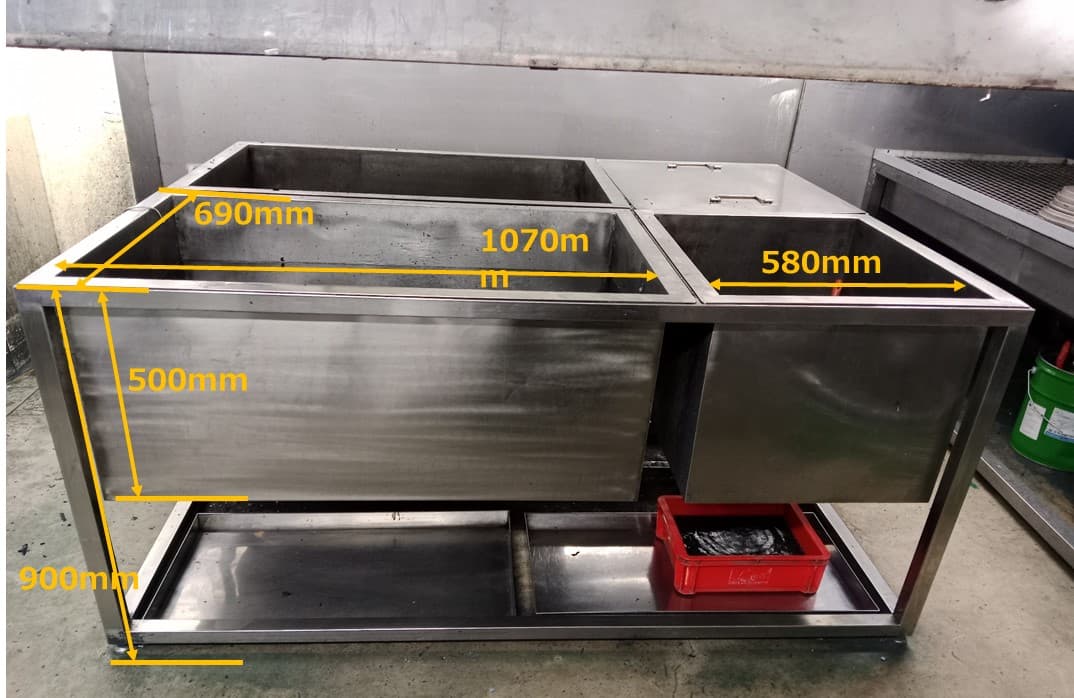
- A heater was fitted to the existing cleaning tank to hold the bath at 70–90 °C
- The brushing step was dropped; the process is now "soak → light wipe"
- STRIAL UM-25U is outside the scope of Japan's Fire Service Act, Organic Solvent Poisoning Prevention Rules and Poisonous and Deleterious Substances Control Act, so storage and handling controls became lighter
What this case shows
- Compare jig-cleaning chemicals by monthly spend, not by price per litre
- Moving from an evaporating solvent to a heated soak-type remover cuts the volume you use
- "How long cleaning takes" is a practical signal for when to change the bath
FAQ
Q. Will it work on our jigs?
Results depend on the coating type (epoxy, urethane, acrylic, powder, etc.) and the jig material. Send us one or two jigs and we will run a free removal test.
Q. Can we use it on aluminium jigs?
UM-25U is mildly alkaline and needs care on aluminium. For aluminium jigs we recommend the neutral grade, UM-21U.
Q. Is heating really necessary?
Yes. STRIAL works at 70–90 °C (UM-25U). You can fit a heater to an existing tank or set up a dedicated heated tank.
If jig-cleaning cost or operator burden is a concern, tell us your coating type and jig material. We will show you the result with a free removal test.